You don’t need to buy the Skims advent calendar to have an opinion on it. You may not even need to watch the unboxing. Someone finding hair ties down the side of their sofa can tell you the story in seconds.
That is what makes this more interesting than another disappointing Christmas product. Customers reviewed it, other people turned those reviews into jokes, and brands joined in with versions of their own.
For social media teams, it is a useful example of how a campaign can take on a life far beyond the content you planned. Your product becomes material for other people’s entertainment, and their version can shape how audiences encounter your brand.
Wait, what happened?
Skims, the clothing and shapewear brand co-founded by Kim Kardashian, launched a 12-day accessories advent calendar priced at $148 in the US and £158 in the UK. Inside were items including hair ties, bobby pins, clips, keyrings and headbands made from bra elastic.
TikTok and Instagram were awash with creators sharing their shock and disappointment in various creative ways.
The BBC’s recap covers the backlash and Skims’ subsequent offer of refunds or credit. But the social media story goes well beyond the scathing unboxings and spoofs of how Skims’ put the calendar together.
The internet found something it could join in with
The unboxing gave viewers a simple, repeatable joke: apparently, you could assemble a Skims advent calendar from the random bits already lying around your home.
People filmed themselves retrieving things from their sofas and joked that they had accidentally recreated the calendar. Others compared the contents to objects their cats collected or the bits lurking beside a car seat.
Then there were the spoofs of warehouse workers emptying their pockets, offering an imaginary explanation for how the calendar had been put together.
These were different versions of the same criticism. Rather than writing a complaint about perceived value, people could show a handful of odds and ends and let the audience make the connection.
You didn’t need the product, a large following or an elaborate set-up to take part. You needed to recognise the joke and add your own version. That made it easy for the story to keep moving beyond the people who had actually bought the calendar.
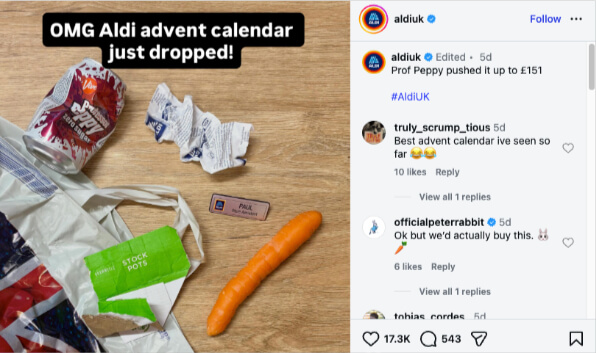
Other brands spotted an opening
The meme becomes part of the brand experience
People discover and discuss brands through creators, comments, private shares and each other’s jokes. They can experience a product second-hand, through someone else’s reaction, before seeing any official campaign content.
The Skims backlash is a reminder that a gap between what a brand promises and what it delivers can quickly be amplified on social media, with serious consequences for its reputation and customer trust.
How did Skims handle the response?
Skims said it contacted every purchaser and apologised for the disappointment. Its reported customer email acknowledged that “we fell short this time”.
Customers could return the calendar for a full refund, with return shipping covered, or keep it and receive store credit.
One PR agency praised the response as a crisis communications masterclass. There is useful practice here: acknowledge the problem, contact affected customers and give them a practical remedy.
What should social media teams take from it?
1. Unbox it before your customers do
Test the finished product with someone outside the campaign team. Give them the real price, ask them to open it and watch without explaining away anything that disappoints them.
Then publish your own honest preview before customers receive it. Show sizes, quantities and unfamiliar items clearly. Give people enough information to judge whether it is for them.
While a brand-led unboxing can’t fix a flawed product, it can help to establish expectations and help your community team to workshop realistic responses.
2. Consider what people could make of it
Alongside the launch creative, ask what someone might screenshot, crop, compare or turn into a joke.
Does the packaging suggest more than the contents deliver? Could one underwhelming item become the image that represents the whole product? Is the price likely to become the punchline?
Ask community managers and people who understand your audience to challenge the campaign while there is still time to change it. If a predictable joke exposes a real weakness, take that feedback to the product team.
3. Monitor how the story is changing
Track original reviews, reposts, parody videos, comments and brand responses beyond your own accounts.
Tell colleagues whether you are seeing an isolated complaint, repeated customer disappointment, an inaccurate claim or a joke spreading among people who have never bought the product. Each calls for a different decision.
Your reporting should explain what people are communicating about the brand, as well as how many mentions it received.
4. Give customers help without feeding every joke
Make accurate information and remedies easy to find. Equip social teams with clear answers and a route to someone who can approve action.
You do not need to reply to every parody. A defensive explanation beneath a joke may simply provide material for the next one. Equally, being funny should not become an excuse to avoid genuine customer concern.
Apply moderation rules to abuse and harmful content consistently. Make sure criticism reaches people who can do something about it.
5. Judge the response by what happens next
Check whether people can obtain the promised refund or replacement, whether recurring questions are being answered and whether the feedback reaches future product planning.
Look beyond total engagement. Is confusion reducing? Are customers reporting that their issue has been resolved? Are the same complaints returning?
Our guide to what happens after a brand posts a crisis statement explores why that ongoing work matters.
Plan for the versions you won’t be publishing
The Skims calendar gave audiences a product to review and a joke they could make their own. Every new version offered another route into the story.
You cannot script those reactions, but you can test the experience honestly, understand how your audience communicates and give your social team the information and authority to respond.
Planning a launch? Talk to StrawberrySocial about community management, moderation and monitoring, so your team is ready for the conversations beyond the campaign.


 November 17, 2026


 Share This Post