
More Tools, More Scrutiny: Why Human Judgement Matters More Than Ever

Written By:Liz Malone-Johnstone
 June 22, 2026
Always-on, on-brand engagement across every channel. We respond, nurture and grow your community so you never miss a conversation.
Rigorous vetting and monitoring of influencer partnerships to keep your brand compliant and protected from reputational risk.
Round-the-clock moderation that protects your reputation. We manage escalations and keep your spaces safe.
From audits and channel reviews to platform changes and emerging trends, we help organisations turn insight into action.
Join the team behind some of the world’s most active online communities. Explore careers, freelance opportunities and life at StrawberrySocial.
Latest company news from the StrawberrySocial team.
Insights and strategies for building safer online communities and stronger brands
Guidance, tools and practical resources to help organisations build safer, healthier online communities.
The latest updates on AI, online safety, platform policy and moderation trends shaping digital communities.

Always-on, on-brand engagement across every channel. We respond, nurture and grow your community so you never miss a conversation.
Rigorous vetting and monitoring of influencer partnerships to keep your brand compliant and protected from reputational risk.
Round-the-clock moderation that protects your reputation. We manage escalations and keep your spaces safe.
From audits and channel reviews to platform changes and emerging trends, we help organisations turn insight into action.
Join the team behind some of the world’s most active online communities. Explore careers, freelance opportunities and life at StrawberrySocial.
Latest company news from the StrawberrySocial team.
Insights and strategies for building safer online communities and stronger brands
Guidance, tools and practical resources to help organisations build safer, healthier online communities.
The latest updates on AI, online safety, platform policy and moderation trends shaping digital communities.
June 22, 2026 A marketing email sent by Wowcher has become a national news story after its subject line appeared to make light of a serious crocodile attack involving a three-year-old child.
Although the message was sent by email rather than published on social media, screenshots and (valid) criticism quickly spread online. What began as a failure in one marketing channel became a wider reputational and community management issue.
Social media teams are then often left managing the consequences of decisions made elsewhere, from responding to criticism and monitoring sentiment to escalating an emerging risk.
(We see you. Managing the fallout is often treated as “just social media”, when in reality it requires judgement, experience and proper support. That is exactly where we can help.)
Wowcher said the wording had never been approved and is now reviewing its creative, approval and sign-off processes. That points to the bigger issue. Tools and automated workflows may make it possible to generate, schedule and publish content at greater speed, but they do not replace experienced oversight. Without somebody senior enough to question the idea, consider the wider context and stop unsuitable content from going live, efficiency simply allows mistakes to travel faster.
This feels particularly relevant as platforms introduce more tools to help teams create, automate and publish content quickly. The opportunity is obvious, particularly for stretched teams. But faster production needs to be matched by stronger review processes, clear accountability and human judgement.
Many social media teams are reporting increased engagement on Facebook, which Meta attributes partly to its efforts to prioritise original content.
More engagement is welcome, but it also means more comments, questions and potential flashpoints to manage. The real opportunity is not simply achieving a higher engagement rate. It is using that activity to understand what audiences care about and build stronger relationships with them.
Elsewhere, Pinterest’s Summer 2026 Trend Report explores how sport is influencing online communities, while LinkedIn has published new video guidance for creators. Bluesky is also introducing features designed to support longer-form content and deeper discussions.
These updates all point towards the same opportunity: content that starts meaningful conversations rather than simply filling a publishing calendar.
Snapchat’s latest creator marketing research also suggests that creator-led campaigns can help strengthen trust and audience connection. However, creator partnerships need more than a well-known face. Audience fit, shared values, creative control, disclosure requirements and comment management all need to be considered.
Comments need responses. Emerging issues need to be identified. Harmful contributions need to be handled consistently. Valuable audience feedback needs to reach the right people internally.
Before increasing content volume, organisations should ask whether their community management and moderation processes can support the response.
Creating the post is only one part of the job.
Instagram, Meta and YouTube have all introduced tools intended to make creating, editing and publishing content easier.
Instagram has expanded its in-app editing and creative features. Meta has added a publishing calendar, bulk Reel uploads and wider access to AI-powered business agents. YouTube has introduced new podcast features, expanded likeness detection and made AI-content labels more prominent.
These tools could save valuable time, particularly for stretched social media teams. But easier production also means more organisations can create more content, faster.
A packed publishing calendar is not necessarily a better one.
Research from The State of Brand suggests that audiences increasingly value originality and human perspectives over highly polished AI-generated content. People are becoming quicker to recognise content that feels generic, overproduced or disconnected from the people supposedly behind it.
That does not mean every post needs to be informal or unpolished. It means it should have a reason to exist beyond filling a gap in the schedule.
Production efficiency is no longer much of a competitive advantage when everyone has access to similar tools.
The organisations that stand out will be those with a clear perspective, a recognisable voice and a strong understanding of what their communities find useful.
AI can provide valuable support behind the scenes. It should not make everything an organisation publishes sound like everybody else.
Research from Internet Matters suggests that one-third of UK children have bypassed age-verification mechanisms on social platforms, raising further questions about how effective current safeguards are.
The UK Government has also announced plans to ban under-16s from accessing major social media platforms from 2027.
There is still considerable detail to be worked through, including which services will be covered and how restrictions will be enforced. For charities, education providers and youth-focused organisations, the changes could also affect how they reach young people and provide access to trusted information and support.
Meanwhile, AI adoption continues to grow across the charity sector. The latest Charity Digital Skills Report found that 88% of charities now use AI in their day-to-day operations, while 55% identify skills and confidence gaps as their biggest barrier.
This creates an important tension. Organisations are adopting AI quickly at the same time as audiences are becoming more wary of generic, inaccurate or impersonal AI-generated content.
The answer is not to stop using AI. It is to use it deliberately, with clear policies, practical training and defined review processes.
Age checks, AI labels, approval workflows and written policies can all support safer digital activity. None of them removes the need for experienced human decision-making.
As the Wowcher example demonstrates, a failure in one channel can quickly become a social media and reputational problem.
Organisations need to be clear about who is responsible for reviewing content, questioning poor decisions, spotting emerging risks and managing escalation when something goes wrong.
Passing through an approval process does not necessarily mean that good judgement has been applied.
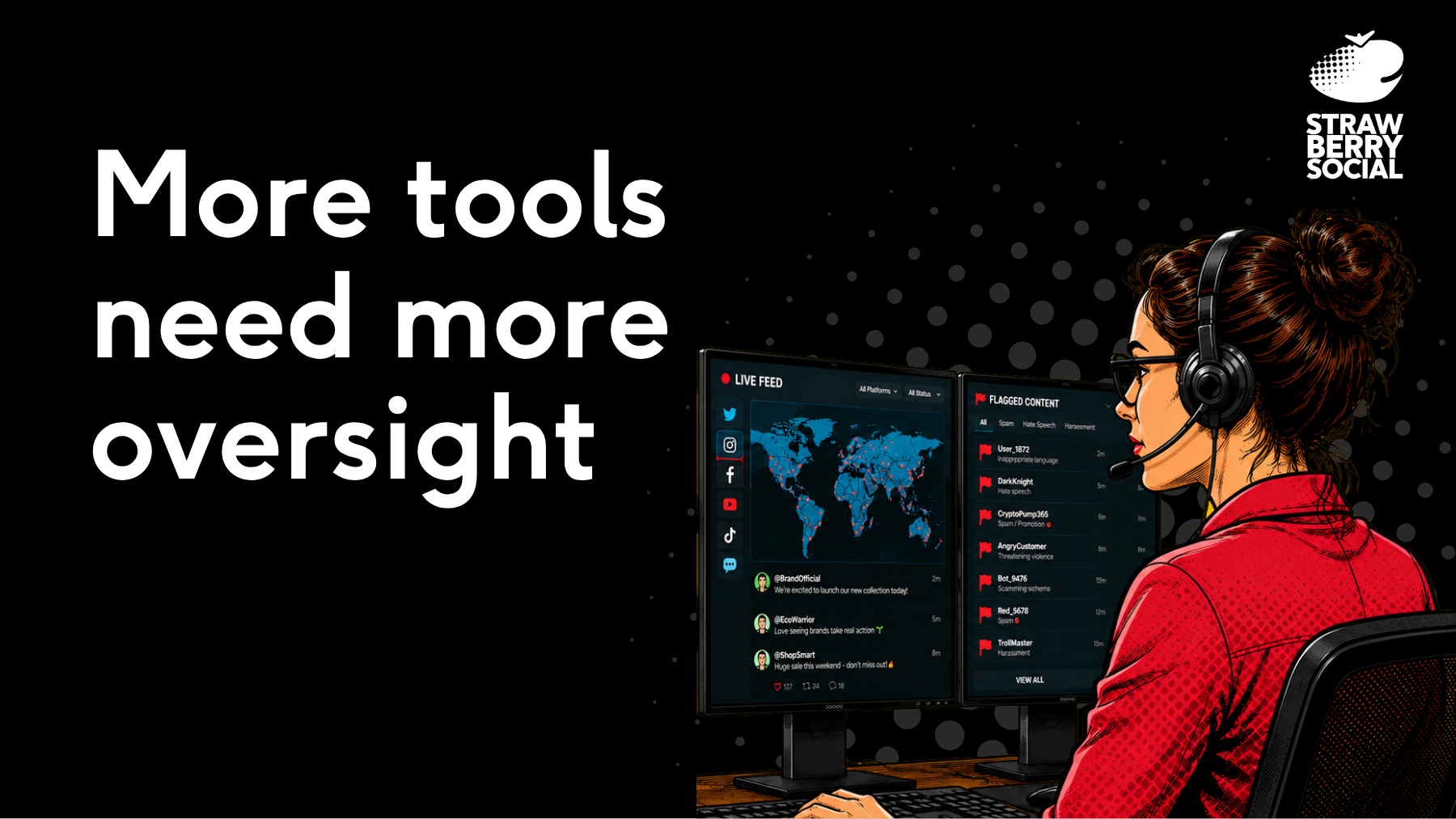
Social media teams have no shortage of new tools. The harder task is deciding how to use them responsibly while maintaining the audience understanding and human judgement that technology cannot replace.
More engagement creates more conversations to manage. Faster publishing creates more competition for attention. Greater AI adoption creates a stronger need for governance, review and distinctiveness.
Because publishing is not the end of the process. It is often the point at which the real work begins.
Sign up for the StrawberrySocial newsletter for the latest platform updates, moderation developments and practical social media insights, delivered directly to your inbox.
 Share This Post